Symphonic Dances From West Side Story Program Notes
MW3 – West Side Story Leonard Bernstein On the Waterfront, Symphonic SuiteAcknowledged early in his career as one of the shining lights of twentieth-century music, Leonard Bernstein soon contracted the disapproval of the classical music establishment for dissipating his enormous talent, sticking his fingers into too many musical pies: conducting, symphonic composition, jazz/classical hybridization, musical theater and teaching. Although his miscegenation of genres and styles angered purists, Bernstein’s compositions are among the most accessible and beloved by audiences. Bernstein was one of history’s most frenetic musicians. By the early 1950s, having succeeded as composer in the concert hall – his Symphony No.
Discover releases, reviews, track listings, recommendations, and more about Bernstein. Conducts New York Philharmonic. Symphonic Dances From West Side Story / Symphonic Suite From On The Waterfront at Discogs. Complete your Bernstein. Conducts New York Philharmonic. collection. Symphonic Dances from West Side Story Prologue Somewhere Scherzo Mambo! Cha-cha (Maria) Meeting Scene Cool – Fugue Rumble Finale (Louis) Leonard Bernstein (Born in Lawrence, Massachusetts on August 25, 1918; died in New York City on October 25, 1990) Like many composers before him – Tchaikovsky, Prokofiev, Gounod, Berlioz and Bellini (to name some of.
1, “Jeremiah,” won the New York Music Critics’ Award – and on Broadway with On the Town and Wonderful Town, he cast around for an appropriate film project. He rejected many offers from Hollywood, but viewing the rough cuts of Marlon Brando’s acting in On the Waterfront, one of the greatest movies of the 1950s, finally inspired him to compose his only film score.The socio-political action drama is based on a 1949 series of Pulitzer Prize-winning articles in the New York Sun, exposing labor racketeering in the New York dockyards. Ex-boxer and dockyard worker Terry Malloy (Brando), a runner for boss “Johnny Friendly,” unwittingly enables the murder of a gentle but rebellious co-worker. Pressured to both speak and remain silent in the face of a crime investigation of the longshoremen’s cartel, Terry finds redemption through the example of the tough-talking priest Father Barry (Karl Malden), his love for the murdered man's sister Edie (Eva Marie-Saint) and finally, Friendly’s murder of Terry’s own brother. The film was directed by Elia Kazan and garnered eight Oscars.
Bernstein’s score was nominated but was beaten out by Gene de Paul’s score for the musical Seven Brides for Seven Brothers.Shortly after the premiere in 1954, Bernstein assembled the Symphonic Suite to “salvage some of the music that would otherwise have been left on the floor of the dubbing-room.” It has the form of a symphonic poem, loosely following the movie action. The Suite contains four principle themes, opening with a quiet, atmospheric sounding like the “Aaron Copland American sound” plus blue notes thrown in. There follows an extensive timpani, percussion and saxophone solo initiating the “dockyard violence” theme that accompanies the fight scenes and foreshadows the gang-fight dance numbers from West Side Story. The Suite continues with a slower section that accompanies Terry’s moments of loneliness and self-doubt, gradually blending into the love between Terry and Edie, a gentle flute solo, and another forebear of Tony and Maria. The last several minutes of the Suite, however, touch only incidentally on the climactic fight between Terry and Friendly, whom Terry has denounced in court. Instead Bernstein returns to the opening music, which now takes on an increasingly majestic mood, and eventually accompanies the badly beaten and barely conscious Terry’s stagger through the lines of Friendly’s grudgingly admiring teamsters.
Joseph Schwantner New Morning for the World: “Daybreak of Freedom”Born and raised in Chicago, Joseph Schwantner studied at the Chicago Conservatory and Northwestern University to become a “classical” composer, completing a doctorate in 1968. While a student, he made his living as a jazz musician and arranger. In 1970 he was the first recipient of the Charles Ives scholarship of the American Academy of Arts and Letters and was elected to the Academy in 2002.
In 1979 he received the Pulitzer Prize for Music for his orchestral work Aftertones of Infinity. Since 1970 he has taught composition at Eastman, Juilliard and Yale.Schwantner composed New Morning for the World in 1982 as a narrative piece for baseball great Willie Stargell – former first baseman of the Pittsburgh Pirates – to honor Dr. Martin Luther King, Jr. As text he used excerpts taken from some of the most stirring published writings of Dr. King, which he chose himself, calling it a memorial to “a man of great dignity whom I had long admired.” The form of the work and the use of narrator were clearly influenced by Copland's A Lincoln Portrait.The violent percussive opening contains the rhythm of New Morning’s recurring. It contrasts repeatedly with the gentleness of the answering strings, woodwinds and celesta, reflecting the contrast between the external violence surrounding King that ultimately led to his death, and the gentle determination of his words and demeanor. This contrast is reiterated again and again throughout the work, the recurring introducing the narrator’s first statement.
31780 records. Quest sql optimizer 8.8 for oracle serial numbers, cracks and keygens are presented here. No registration is needed. Just download and enjoy. Quest SQL Optimizer for Oracle 8.5.0.2031 + Crack Keygen/Serial. Date added: Jan 2016. Quest SQL Optimizer for Oracle 8.5.0.2031 screenshot ScreenShot. Download Quest SQL Optimizer for Oracle 8.5.0.2031 + keygen crack. Review this Software. You may use these HTML tags and. 14298 records. Quest sql optimizer for oracle serial numbers, cracks and keygens are presented here. No registration is needed. Just download and enjoy. Run Keygen.exe; Enter Site Message (i.e. Toad Software); Select your desired product (i.e. TOAD); Click Generate button. This single piece of software is able to generate Authorization Key to unlock the following Quest products: Toad for Oracle; Formatter Plus; SQL Tuning(Sysbase); SQL Tuning(Oracle). 
The tempo picks up in the middle, signaling the accelerating pace of change and expectation – and violence. The clash ends suddenly with a sustained timpani roll, leading into a recitation of parts of “I have a dream. ” The work ends, dreamily, with members of the orchestra softly humming over a tinkling celesta in what Schwantner calls a “celestial choir.”.
Duke (Edward Kennedy) Ellington “Giggling Rapids” from The River SuiteAmong the great Big-band leaders, Duke Ellington was the only one who could be everything: composer, arranger, pianist and bandleader. Born in Washington, DC, where his father was a butler, he began playing the piano at age seven, making his professional debut as a ragtime pianist at 17. Ellington moved to New York in 1923 to join Elmer Snowden’s Washington Band. In 1930 his composition Mood Indigo catapulted him to world fame. Elegant and well spoken, he was one of the most important figures of the Harlem Renaissance and a symbol of the Big Band jazz era.

He composed over 2000 works, many of them three-minute pieces, constrained by the limitations of the old 78 rpm records. Every member of his band was a virtuoso, and Ellington incorporated their original riffs as part of his compositional process. He composed in many genres, including film music ( Anatomy of a Murder) and, towards the end of his life, liturgical music.In 1969 Ellington received the Presidential Medal of Honor and in 1970 was elected to the exclusive National Institute of Arts and Letters. He was also the first jazz musician to be named a member of the Swedish Royal Academy of Music.In 1970, the American Ballet Theatre commissioned Ellington to compose a ballet for choreographer Alvin Ailey. The River, according to Ailey in a 1983 interview, “( The River) was to be all water music, and it was to follow the course of this stream through various stages: through a meander, a falls, a whirlpool, and then gurgling rapids. I fell in love with the idea.” Ellington combined the European classical tradition with jazz, the blues and swing harmonies and rhythms, creating an American jazz incarnation of Smetana’s Vlatava (The Moldau). Ellington was deep into liturgical music, and he saw the river as an allegory to birth and rebirth.

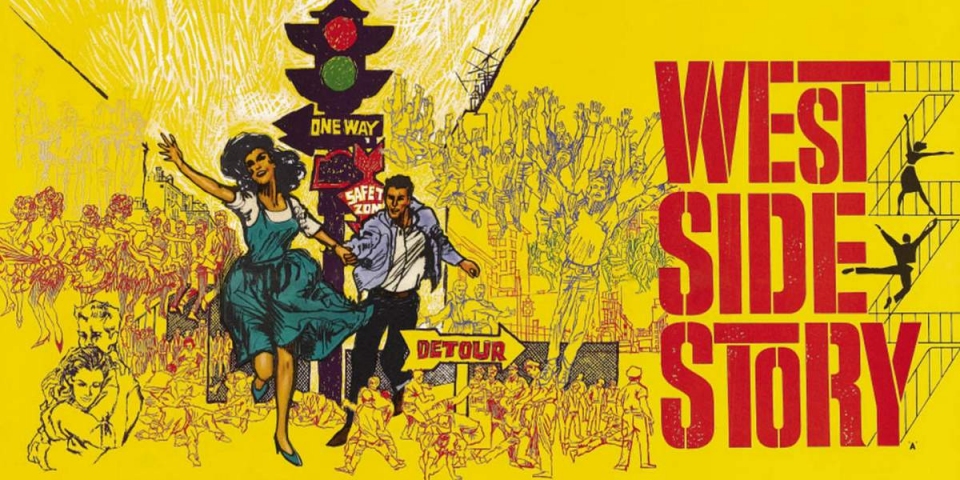
West Side Story Remake
The ballet comprised 12 movements arranged for piano and big band; Trombonist, composer and arranger Ron Collier (1930-2003), who worked with Ellington, orchestrated seven of them for symphony orchestra.The history of this work – as with most of Ellington’s music – raises as many unanswered questions as the thorniest problems of authentic attribution and performance practice in early music scholarship. First of all, there is no definitive score; once liberated from the constraints of choreography, every performance was different as the composer modified the music with new riffs for particular players, or simply re-composed the music according to the improvisatory nature of jazz. The leads into the main tunes are especially open to a flexible approach in all interpretations of Ellington’s compositions. He did, however, work with arrangers such as Collier, to commit a version to paper. Exactly what the original ballet score sounded like we will probably never know.In Giggling Rapids, Ellington adapts typical musical water imagery into jazz riffs.
Symphonic Dances From West Side Story Program Notes For Kids
CONTACT: ProgramNotes@aol.com'Kenneth LaFave writes program notes that appeal to people with all levels of musical knowledge. He does an exemplary job of writing in a way that is both approachable and readable.' Britting, Assoc.
Director of Communications, The Philadelphia OrchestraIf you need program notes for the next concert of your symphony orchestra, choir, chamber group or voice studio, you've come to the right place. Annotator Kenneth LaFave has written for The New York Philharmonic, The Philadelphia Orchestra, the Cleveland Orchestra, Lincoln Center for the Performing Arts, The Juilliard School, The Phoenix Symphony, the festivals at Aspen and Tanglewood, and many other organizations.You can purchase already-written notes, or commission new ones. To peruse notes now available, click the drop-down menu above and choose a category. Choose from symphonic, chamber, choral, art song, solo keyboard, opera, contemporary and miscellaneous. (Miscellaneous includes light music and more.) Or put a composer's name in the search window in the header, above right.
When you find the title you're looking for, you'll be able to read the first third-to-half of the note as a blog post. If you like what you read, just follow the payment instructions at the end of the excerpt.To commission a new note, contact Kenneth LaFave directly at ProgramNotes@aol.com. The cost for a set of notes to a full-length concert averages $350. The price for reprinting a note is indicated at the end of each post. For notes under 500 words, the price is $25; for 500-800 words, it's $50; for 800 to 1,200 words, $75; and for notes longer than 1,200 words, $100. You always pay less than 10 cents per word to reprint notes originally written for such major organizations as The Philadelphia Orchestra and Lincoln Center for the Performing Arts.Please observe: WHEN QUOTING FROM THESE NOTES, YOU MUST CREDIT THE AUTHOR, KENNETH LAFAVE, AND CITE THIS WEBSITE AS YOUR SOURCE.
Thank you. Great Composers Tees and Mugs.